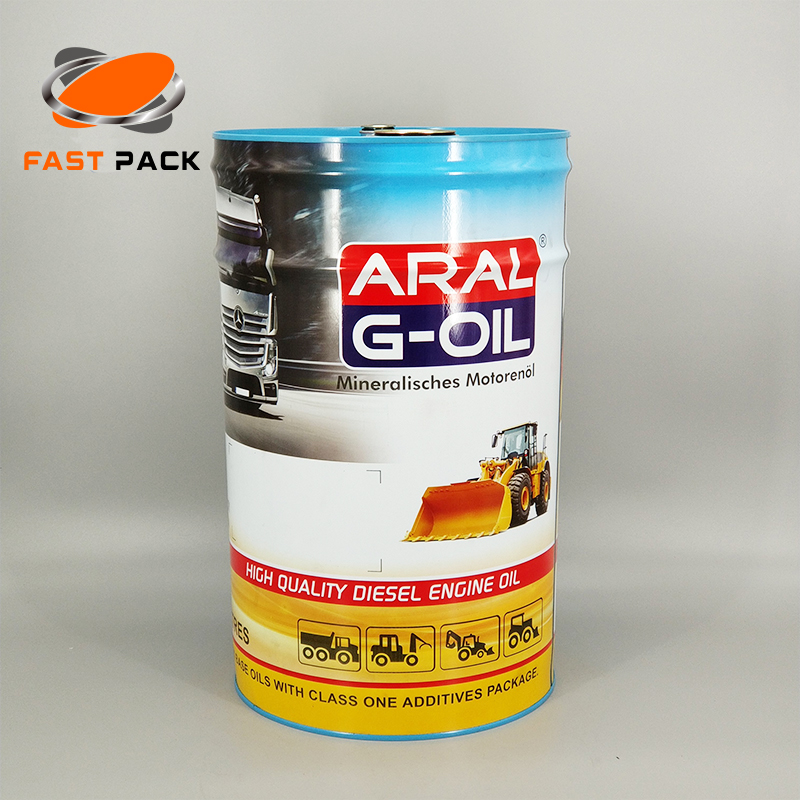
Standard for coating inside of tinplate cans
Canned containers made of tinplate usually need to be coated with some kind of paint on the inner surface. The purpose is to prevent the chemical interaction between the can content and the can wall and the contamination of the content by trace harmful substances, and to protect the freshness of the content. As well as the original flavor, the starting food can be stored, transported and sold for a long time without affecting its edible value.
A.Principle of coating
1.The inner surface of the can is coated with paint, before the tinplate is cut into can body blanks, the appropriate paint is printed on the smooth surface of the tinplate with a roller coater to form a uniform, thickness-controllable coating
2.The side seam welding part of the cans should not be coated with paint, otherwise the can body blank will easily break through the side seam during the high-frequency resistance welding process and cause waste can
3.The coated tinplate is transported to the drying room by conveyor belt, and is cured at high temperature through the drying room driven by the circulating chain.
B.Technical requirements
1.Coating type and applicability
Epoxy-phenolic resin coating: This coating has the widest application range. It has good corrosion resistance to acidic food, and its epoxy resin component makes it have good adhesion and flexibility. Its baking temperature is about 200~210℃/15min. It is mainly suitable for canned food such as soup, meat, fish, fruit and juice. It can also be used for the inner and outer surface coating of crown caps and various other caps.
Acrylic resin coating: usually white with titanium dioxide filler, good flexibility and excellent sulfur resistance. It is mainly used for vegetables, soups and foods that contain substances that can generate vulcanization spots. The inner wall of the opened can has a ceramic-like and attractive appearance.
Phenolic resin coating: good coverage and excellent corrosion resistance to chemicals. It has the ability to block sulfide ions so that it cannot penetrate the coating. It is suitable for meat, fish, vegetables and soup. However, the adhesion to the surface of tinplate is poor, especially when the coating thickness is greater than 3 to 4 mm, the flexibility of the coating is poor. The baking temperature generally does not exceed 190°C, otherwise the coating penetrates into the substrate through the pores of the tin-plated layer and thermal degradation occurs.
2.Coating thickness
Tin cans need to be dissolved in a small amount of tin, so the coating thickness of the inner wall of cans is generally required to be between 3.5 and 6.0g/m2. Within this thickness range, the coating has a certain porosity, and the liquid of the can content penetrates to the surface of the tin layer through these pores, dissolving the tin slowly to form tin ions, so as to achieve the purpose of extending the shelf life of the can.
3.Baking conditions
To achieve good coating quality, in addition to the sulfur and acid resistance of the coating itself, the drying conditions of the drying room have a close relationship with the formation of the coating structure. The baking temperature and baking time depend on the curing conditions required for the coating. Therefore, the operator must fully understand the relationship between the temperature in the drying room and the surface temperature of the tinplate during production to ensure that the coating printed on the surface of the tinplate can be cured at the required temperature and time to obtain a high-quality coating. Under normal circumstances, the temperature of the drying room and the temperature of the surface of the tinplate differ by 20°C.
4.Drying room bracket
To avoid and reduce the marks of mechanical scratches, it is necessary to keep the drying room bracket clean and bright, and clean it regularly depending on the usage of the bracket. The cleaning sodium hydroxide solution is heated to 80°C, and it is automatically cycled and rinsed, and then rinsed with clean water and dried. The chain and support of the drying room should be checked and repaired at ordinary times to keep the running straight and the speed balanced. If the jitter amplitude of the iron sheet is too large, the wind pressure should be appropriately reduced. The size and load-bearing capacity of the bracket should be proportional to the size and weight of the iron sheet to reduce the vibration amplitude during operation.